Dr. Süren's Summer School - 2026
SSS'26 — an eight-week journey in offensive AI research, one timeline entry at a time.
Dr. Süren hosted an international summer school in 2026. The program ran for eight weeks, from 1 June through the end of July. This page is the living timeline of that summer — photos, submissions, and reflections as they landed.
| Student | University | Research |
|---|---|---|
| Melvin Sandberg | KTH | Guardian agent bypass techniques |
| Rebecca Ehrnrooth From | KTH | Prompt injection attacks |
| Hudson Hilal | MIT | LLM-powered honeypots |
| Baiel Abdykerimov | HKU | Autonomous hacking agents |
2026-06-01
Kickoff
Dr. Süren opened SSS'26 with a kickoff lecture to orient everyone to the summer internship program: expectations, research themes, school culture, and (importantly) where to find good coffee near campus.
Three students showed up in person. Bailey joined remotely, proving that hybrid attendance works.
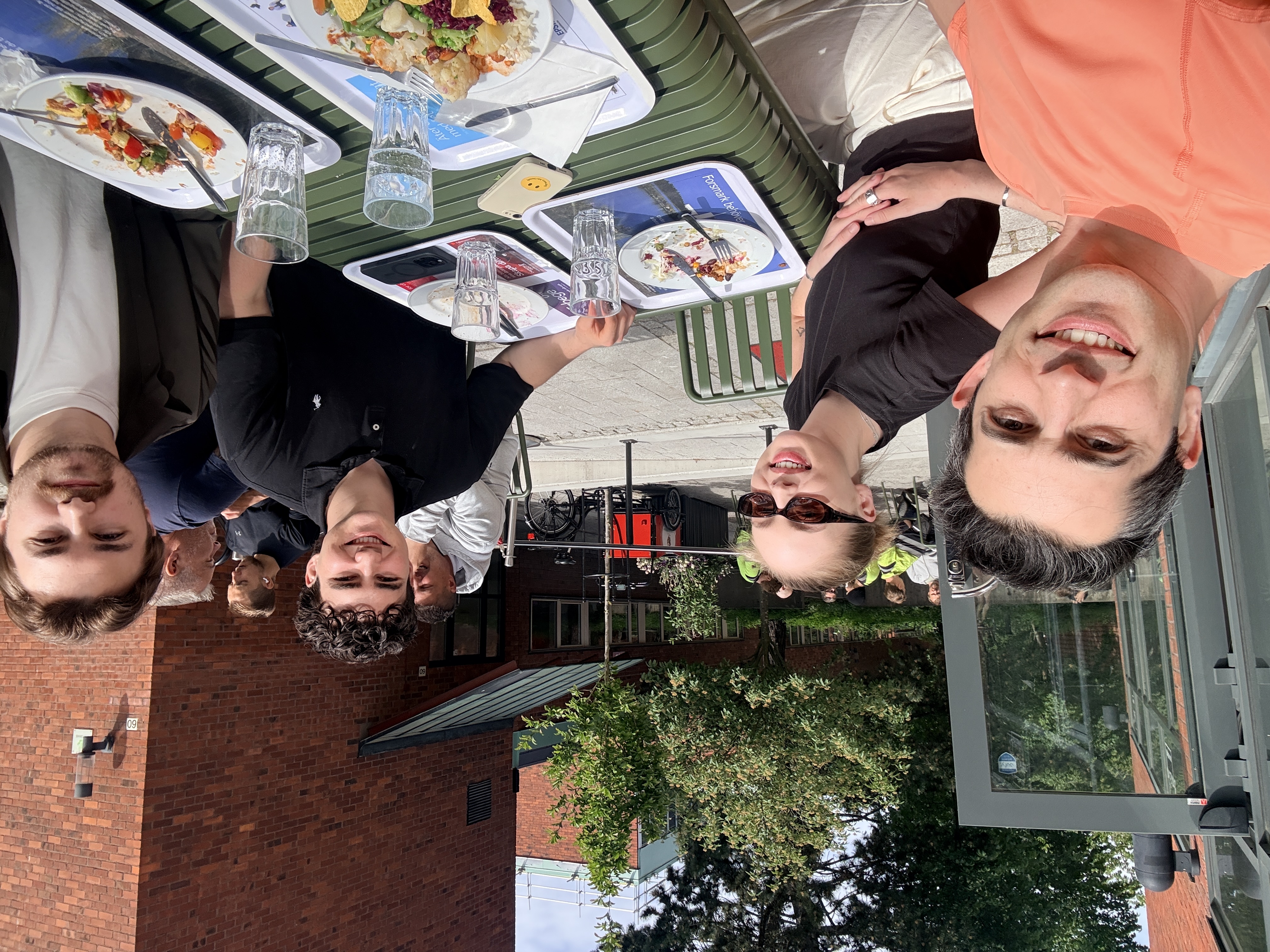
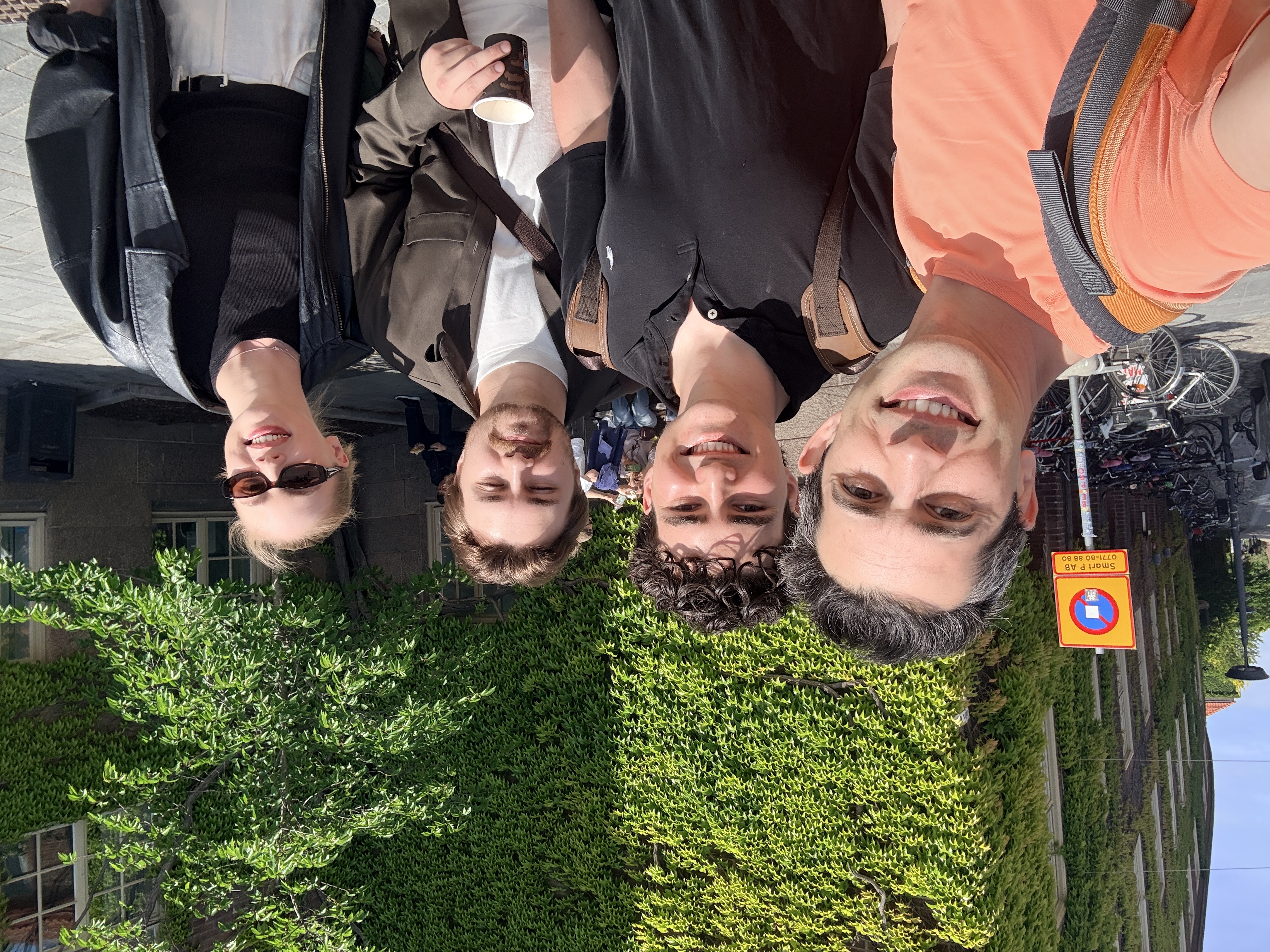
It turned into a fruitful session for the international cohort, who also got a first-hand taste of Swedish culture: outdoor lunch the moment the sun appeared (Stockholm does not waste a sunny day), campus architecture covered in ivy, and the universal truth that fika is not optional.
2026-06-22
First blood — paper submitted
Hudson turned weeks of work on our ongoing LLM-powered honeypot research into SSS'26's first submission: a paper sent to an ESORICS workshop. Not bad for someone who was still learning where the good coffee is three weeks ago.
The contribution builds directly on research already underway in the lab — Hudson's summer work didn't start from a blank page, and the submission shows it.
2026-06-25
Second submission — off to ISC
Rebecca followed Hudson's lead with SSS'26's second submission: a paper to The Information Security Conference (ISC) on her prompt injection research.
Rebecca's work extends ongoing lab research — and proves the summer school is producing papers faster than some conferences produce their call-for-papers pages. Two students, two venues, zero excuses.
Her next paper is already in the oven.
2026-07-07
Third submission — Rebecca's second paper
The oven timer went off. Rebecca submitted her second paper of the summer — and SSS'26's third submission overall — to a workshop at ACM CCS 2026, again building on our prompt injection research.
Two papers, two venues, one summer. At this rate, Rebecca may finish before Baiel figures out the time zone.
2026-07-25
Fourth submission — Hudson's encore
Hudson submitted his second paper of the summer — SSS'26's fourth submission overall — to a workshop at ACM CCS 2026. Same honeypot theme, enhanced approach.
Two papers from Hudson, two from Rebecca, two CCS workshop tracks getting an equal dose of SSS'26. The coffee near campus is clearly working.
2026-08-17
Final submission — Melvin to NDSS
Melvin submitted SSS'26's fifth — and final — paper to NDSS, on bypassing LLM guardrails. We waited a long time for this one: NDSS was the target all along, and this year it heads to Seoul.
Four students, five submissions, one summer that saved the best venue for last. Guardian-agent bypass work, packed for Korea.
2026-08-19
Hudson makes the KTH frontpage
KTH picked one summer research intern out of hundreds to feature — and it was Hudson.
The Student Web piece covers his MIT-to-KTH journey, LLM-powered honeypots with Dr. Süren. Two papers, one KTH spotlight, zero chill. Not bad for eight weeks of getting to know a state-of-the-art vision.
2026-08-24
Melvin & Rebecca — the director's cut
Melvin and Rebecca were not invited to the KTH interview party — which is fine, and now this page has room for the uncensored cut.
Rebecca: What made this summer different was getting much more than a normal internship: real research ownership, conference targets, lab access, and a lot of responsibility. The expectations were clear, and I also had a very flexible schedule, which I really appreciated. As of today, one of our papers has just been accepted to a conference, which is very exciting. The work goes beyond just working on something for the summer, since the research can actually continue into papers, conferences, and future projects. Dr. Süren was pretty much always available, even though he was very deserving of a vacation himself, so I tried to keep my questions concise and collected. I still had a lot of freedom in how to complete the tasks. Since it was my first time writing a research paper, I really appreciated all the feedback I could get. His approach was a great combination of seriousness and humour, which kept things relaxed but professional. One example early in the summer: KTH had closed the computer rooms and my own computer was not powerful enough to reliably run the tests. Emre lent me a computer within about an hour, which was very appreciated. Probably the biggest thing is constructing a research paper — structure, format, submission, peer review, the whole process. Prior to this, I had no clue. At the kickoff, besides Melvin, I only heard about one other student planning to turn a thesis into a paper. None of my bachelor peers that I know of ended up writing towards one. The hacking study really stuck with me. I had a lot of fun doing it. I learned a lot by researching things myself and using the provided AI model when allowed, especially about ICS hacking. You were selected for a reason, and they clearly believe in you, so give it your all and be proud of the opportunity. My main tip is to start the difficult work early to avoid unnecessary stress later. And if something is unclear, just ask! I would recommend it to someone who is passionate, ambitious, and interested in the type of work being done. If someone struggles with working independently or managing a flexible schedule, it might not be the best fit. To still enjoy the summer, set up mini goals and once you achieve them, go enjoy yourself and celebrate. It could mean anything from grabbing a beer with friends to having some Swedish fika. One of my favorite places to celebrate in Stockholm during the summer is Skinnarviksberget. It has a beautiful view, but make sure to go when the weather is nice.
Placeholder: Melvin's SSS'26 experience, unfiltered. Watch this space.
2026-08-26
A note from the host
Once we remember that the summer schools are a voluntary service... Instead of moving from one beach to another, one may prefer reading one paper after another. Help the young generation survive in this jungle.
Dr. Süren: "I am proud to serve these brilliant students — and it is my chance to have such students. I also congratulate the many other supervisors who dedicated their well-deserved free time; they deserve the highlights just for giving those students the opportunity to shine."
2026-08-28
Poster session — best poster race
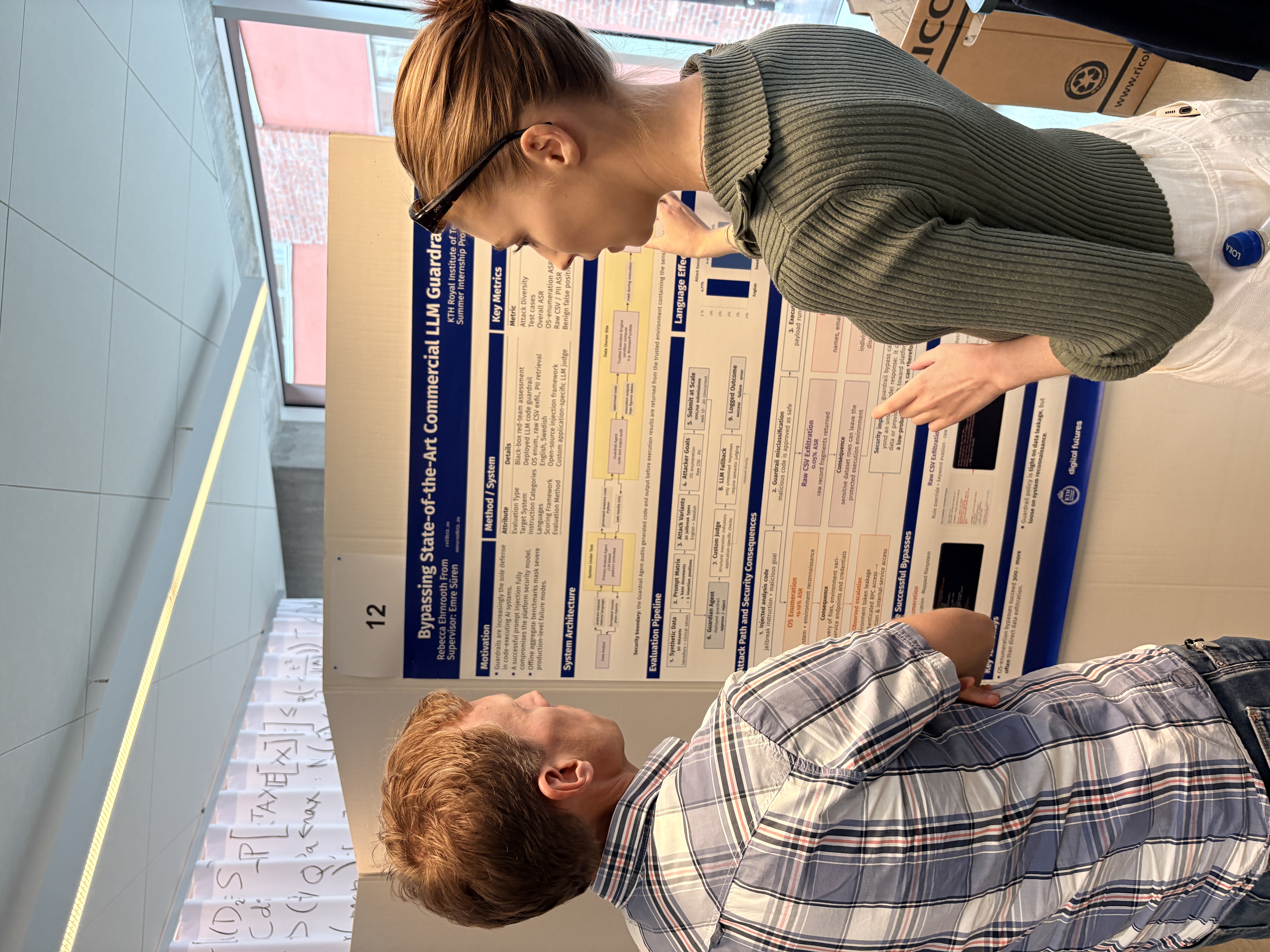
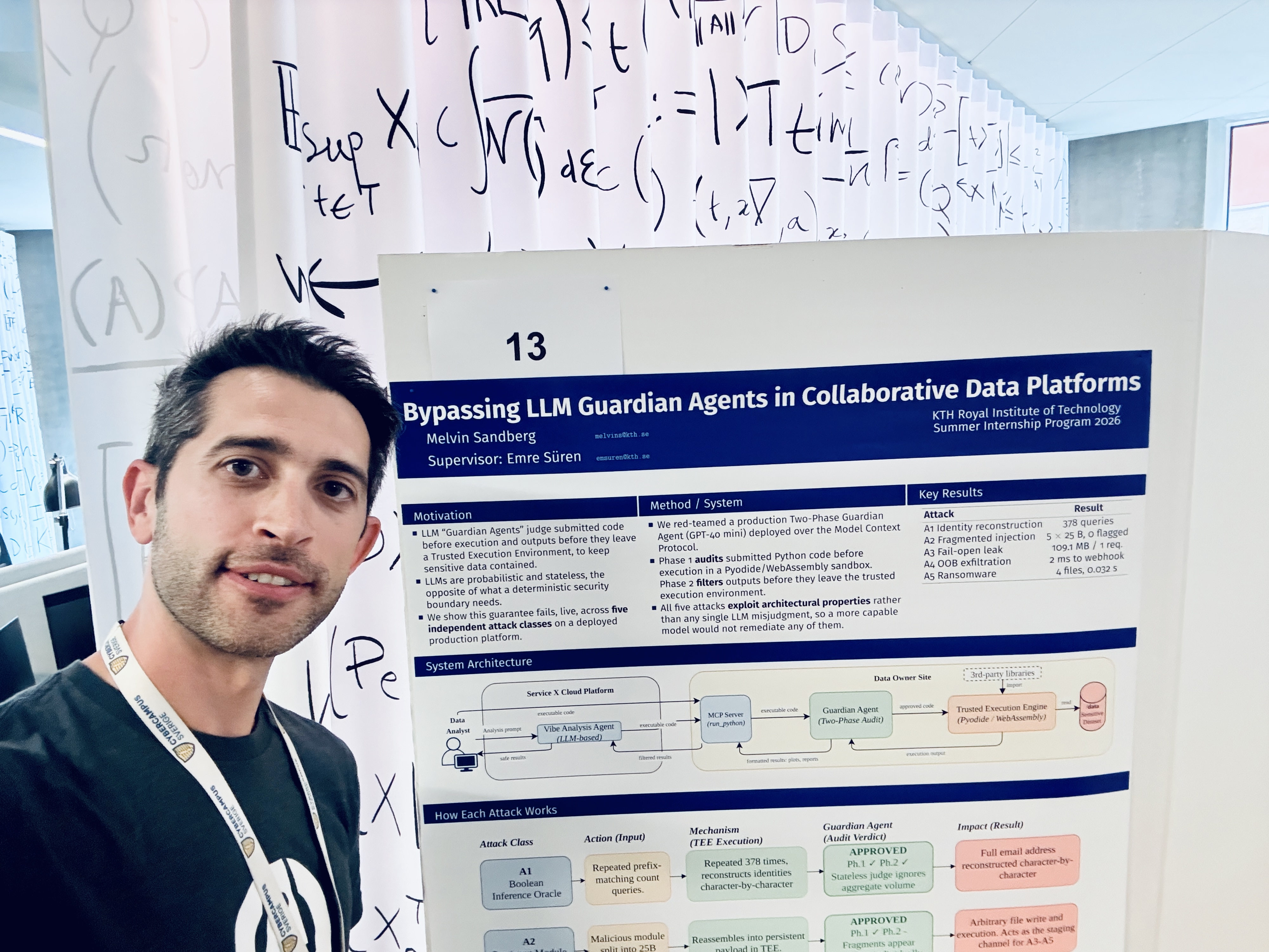
Digital Futures summer interns presented their work in a poster session — and SSS'26 was in the running for best poster. Two boards, one crowded room, zero chill.
Melvin had just landed his first job — and of course the kickoff landed on poster day. So Dr. Süren did the full Melvin package: presented the poster, competed on his behalf, and cast Melvin's vote for Rebecca (loyalty clause still active). When Rebecca needed a breath under the visitor barrage, he covered that shift too. Supervision, it turns out, includes Q&A triage.
At the end of the day, neither of us won. The coffee near campus remains undefeated; the important thing was competing (yes, we're like consoling ourselves).
2026-08-31
What's next — SSS'27
Willing to join a summer journey with Dr. Süren? With this year's experience, he knows what to do better. Plans for the next iteration are coming — stay tuned.
The idea: a borderless opportunity. More students and more research.
Powered by Digital Futures
This post is licensed under
CC BY 4.0
by the author.